JAGCNet - U.S. Army Trial Judiciary
The U.S. Army Trial Judiciary
For access to court-martial filings and documents, please visit: https://www.jagcnet.army.mil/ACMPRS
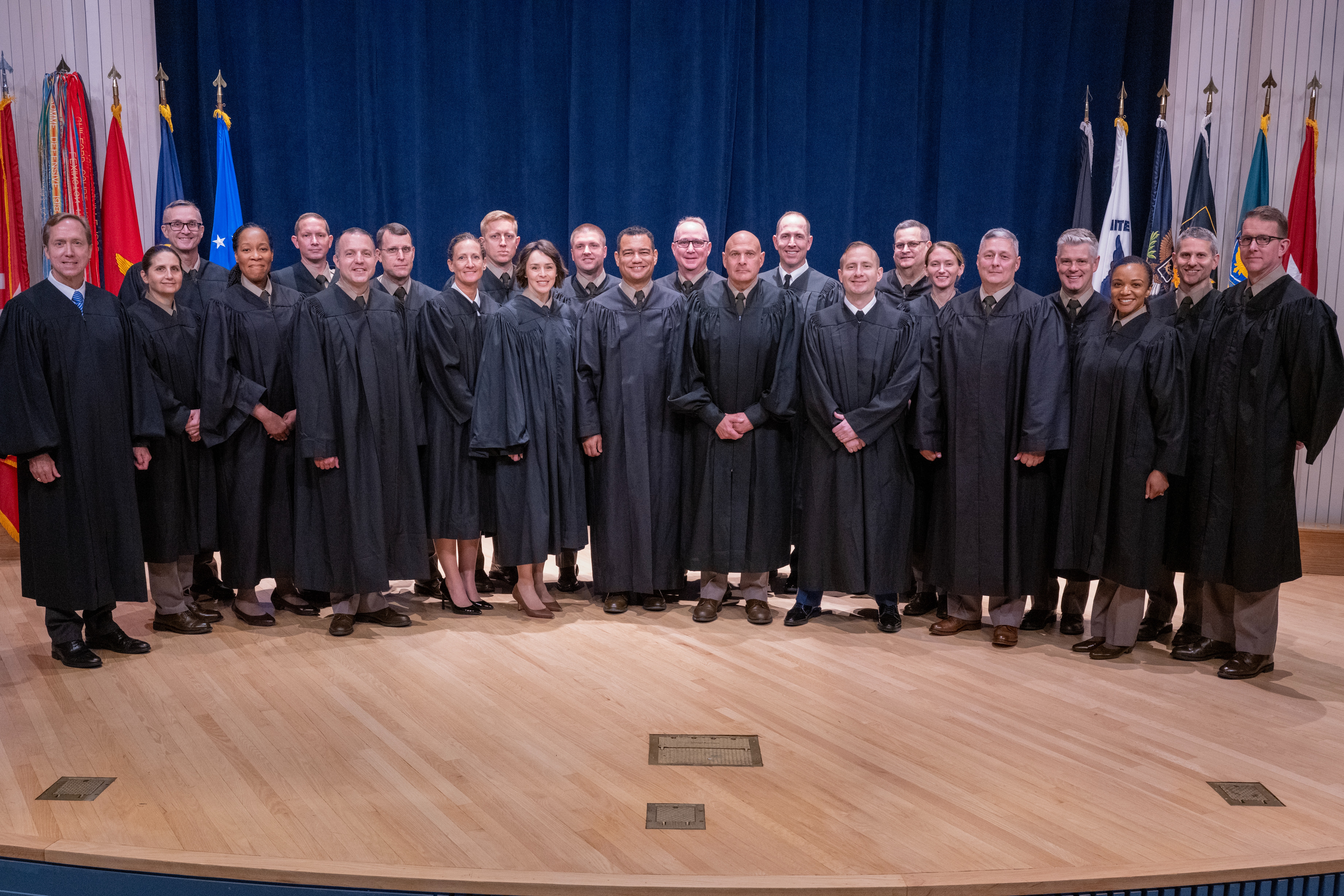
The position of military judge was created in 1969 with the implementation of the Military Justice Act of 1968. Prior to that time, the legal advisor to court-martial panels (juries) was called a law officer, and the law officer did not have the authority and powers of today's military judges.
Military judges preside over general and special courts-martial and powers similar to federal judges including the authority to preside at judge alone trials when an accused elects that option. Military judges instruct court-martial panels on the law and apply the Military Rules of Evidence, patterned closely after the Federal Rules of Evidence. Military judges, like federal judges, may issue warrants, subpoenas, and judicial orders.
The Army Trial Judiciary currently consists of active Army, Army Reserve and Army National Guard military trial judges, all field grade officers and members of the Judge Advocate General's Corps. All military judges are attorneys who have graduated from an accredited law school and are admitted to practice law in one or more states. They are selected based on their record of service and expertise in criminal law.
The Trial Judiciary is divided into eight geographical circuits and encompasses areas designated by TJAG.
In addition to presiding at courts-martial, the Army Trial Judiciary has other significant responsibilities to ensure the quality of the Army judiciary and the fairness of the military justice system to include:
- ● Supervising the Army’s Military Magistrate Program. Chief Circuit Judges appoint qualified judge advocates throughout the Army as military magistrates empowering them, when appropriate, to authorize searches and seizures and to review the necessity for continued pretrial confinement of Soldiers pending courts-martial.
- ● Administering an advocacy-training program for trial and defense counsel. This program includes an initial, gateway session for new counsel and post-trial critiques after each trial when appropriate to improve the advocacy of counsel.
- ● Publishing and updating the Military Judges' Benchbook (DA Pamphlet 27-9) and the Electronic Benchbook. This publication contains the vast majority of panel instructions used by military judges in all five services.
- ● In conjunction with The Judge Advocate General’s Legal Center and School at Charlottesville, Virginia, conducts the Military Judge Course. This is an intensive three-week annual training program for new military judges. The course, which began in 1969 with four courses taught that first year, trains all military trial judges, active and reserve, for all the armed services, including the National Guard. The course includes classroom instruction, practical exercises, seminar discussions, a comprehensive examination, and a graduation and investiture ceremony. Upon successful completion, the respective Service Judge Advocates General certify graduates to preside at courts-martial.
The Army Trial Judiciary’s headquarters is located at 9275 Gunston Road, Fort Belvoir, Virginia.